Estamos cansados de leer a compañeros explicando que el hardware suen muy distinto de las emulaciones, que no les gusta, que les falta esto o AQUELLO...
Pero siempre está el típico científico cuantificador que dice: No suena ni un 50%...
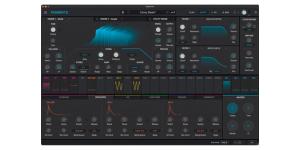
Pues bien, acabo de leer una comparativa de un plug-in que emula un Oberheim expander, gratuito, por cierto.
En el artículo da datos interesantes que dejan con el culo al aire a más de uno que cree que sabe lo que dice con esos porcentajes.
La emulación es de un Oberheim Xpander, y como toda emulación, el comportamiento se ha calibrado en base a "algo".
https://lemusdev.org/ob-poly-xp
La primera es algo difícil de justificar, el hardware antiguo raramente mantiene tono estable, y aquí dice sostener una diferencia de 0.2 centésimas.
No acabo de entender, y no le daría mucha importancia a ésta afirmación.
Sin embargo, en la segunda ya habla de "equivalencia de harmónicos a lo largo del expectro, y ay! aquí sí que tiene sentido, aunque sin anotar el valor de referencia queda un poco desvestido.
Y ya para acabar algo muy relativo, que viene a ser "he hecho los deberes y he copiado sin equivocarme" y he seguido el trazo y mantenido la proporción de las cenefas.
La idea del hilo es anotar por aquí esas descripciones en que se cuantizan estos datos, sobretodo el tema espectral, y así
Pero siempre está el típico científico cuantificador que dice: No suena ni un 50%...
Pues bien, acabo de leer una comparativa de un plug-in que emula un Oberheim expander, gratuito, por cierto.
En el artículo da datos interesantes que dejan con el culo al aire a más de uno que cree que sabe lo que dice con esos porcentajes.
La emulación es de un Oberheim Xpander, y como toda emulación, el comportamiento se ha calibrado en base a "algo".
https://lemusdev.org/ob-poly-xp
La primera es algo difícil de justificar, el hardware antiguo raramente mantiene tono estable, y aquí dice sostener una diferencia de 0.2 centésimas.
No acabo de entender, y no le daría mucha importancia a ésta afirmación.
Alguien escribió:
0.2 cents pitch per octave against real Xpanders, 33 Hz to 1 kHz
Four sets of single notes from real units (freesound, CC0), after the firmware's own TUNE ALL. Note-to-note scatter 0.6 cents; the units', 0.5–1.0.
Sin embargo, en la segunda ya habla de "equivalencia de harmónicos a lo largo del expectro, y ay! aquí sí que tiene sentido, aunque sin anotar el valor de referencia queda un poco desvestido.
Alguien escribió:1 dB
the oscillators' harmonics against a Matrix-12, to the 19th
The triangle and the pulse with the filter open, the triangle's even harmonics included; the noise generator within 1.5 dB from 25 Hz to 13 kHz; the 15 filter modes' shapes on a swept saw within 0.6–1.2 dB rms.
Y ya para acabar algo muy relativo, que viene a ser "he hecho los deberes y he copiado sin equivocarme" y he seguido el trazo y mantenido la proporción de las cenefas.
Alguien escribió:
9 / 9
service-manual checks passed
VERSION, MEM, VMEM, LEDS, DISP, the 4 V reference, the DAC's offset, DAC MONO, and TUNE ALL for VCOS, PW, RES, VCF and VCA, through the firmware. Against ngspice: 88 cases, the 16 pole mixes within 0.07 dB and the filter's oscillation within 0.02 cents.
La idea del hilo es anotar por aquí esas descripciones en que se cuantizan estos datos, sobretodo el tema espectral, y así
Responder
Citar